About Course
Python Training
 This self-paced Python training course is designed for learners who prefer flexibility without compromising on quality. Whether you’re a complete beginner or someone looking to upskill, this course allows you to learn Python programming at your own pace, anytime and anywhere. The course covers fundamental to advanced Python concepts, including data types, control structures, functions, modules, object-oriented programming, and popular libraries used in data analysis and automation.
With a rich mix of video tutorials, interactive quizzes, and hands-on coding exercises, learners can reinforce their understanding and build real-world skills. This Python training course empowers you to master Python on your schedule, making it ideal for working professionals, students, or anyone balancing learning with other commitments.
Key Features Provided by Geeks Analytics:
- On-Demand Learning: Access high-quality video lectures and course materials anytime, anywhere.
- Comprehensive Curriculum: Learn everything from basics to advanced topics with clear, structured content.
- Hands-On Exercises: Practice coding through quizzes, assignments, and real-world projects.
- Flexible Access: Compatible with multiple devices, so you can learn on desktop, tablet, or mobile.
- Lifetime Access: Revisit course content anytime for refresher or advanced learning.
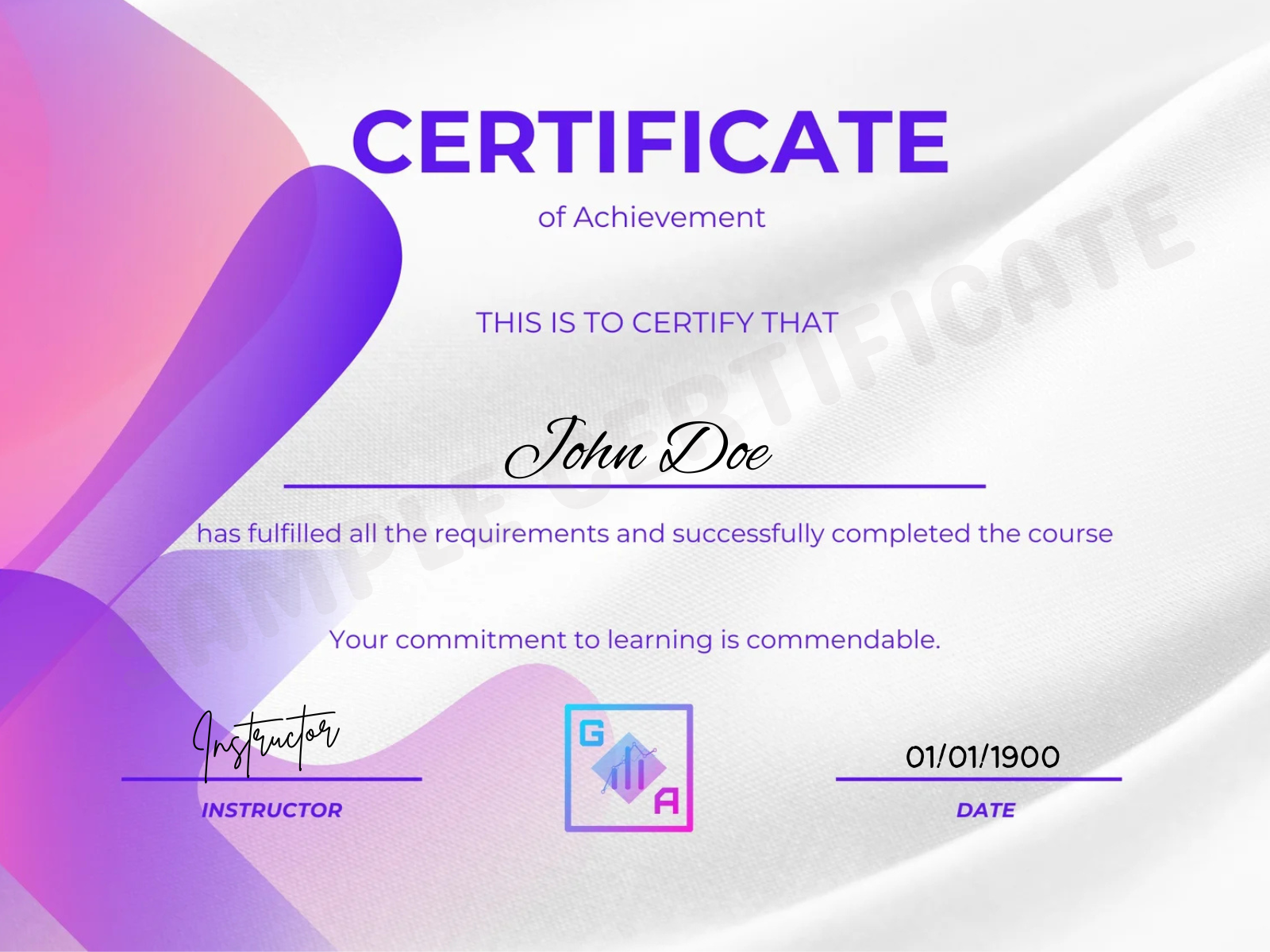
- Certification: Earn a certificate of completion to validate your skills.
- Expert Support: Dedicated support team available for doubt resolution via forums and chat.
- Community Engagement: Connect with fellow learners to share knowledge and stay motivated.
Frequently Asked Questions
Are your Python courses for beginners suitable?
Yes, the Python training course is designed specifically for beginners and introduces Python programming step by step through easy-to-follow lessons and hands-on exercises.Â
Does your Python automation testing training include practical exercises?
Yes, the training includes hands-on exercises and projects focused on automation testing, scripting, workflow automation, and problem-solving using Python.Â
Can I learn python course online at my own pace?
Yes, the online learning format allows students and working professionals to study flexibly according to their own schedules and learning preferences.Â
Is this an affordable python course for students and professionals?
Yes, the course is designed to provide accessible and practical Python training for learners looking to develop valuable programming and automation skills without excessive costs.Â
Is your python course for students helpful for academic growth?
Absolutely. Students can build foundational programming knowledge, improve logical thinking, and develop coding skills that support academic and career development.Â
How can this python course for job preparation help me?
The course helps learners build practical programming, automation, and problem-solving skills that are commonly required in software development, analytics, testing, and IT roles.Â
Do I need prior coding experience to join the course?
No, prior coding experience is not required. The course starts with basic concepts and gradually progresses to more advanced Python programming techniques.Â
Are hands-on projects included in the training?
Yes, learners complete practical assignments and coding projects to strengthen their understanding of Python programming and real-world applications.Â
What Will You Learn?
- Understand the basics of Python programming language and its syntax.
- Work with Python data types like strings, lists, tuples, dictionaries, and sets.
- Implement control flow using loops and conditional statements.
- Write reusable code with functions and modules.
- Apply object-oriented programming concepts in Python.
- Handle files and perform data input/output operations.
- Use Python libraries such as NumPy and Pandas for data manipulation.
- Perform data analysis and visualization with Python tools.
- Automate repetitive tasks and scripts using Python.
- Debug and troubleshoot Python code effectively.
- Develop simple projects to apply Python skills in real-world scenarios.
- Prepare for Python programming job roles with practical coding exercises.
Material Includes
- 7.5 hours on-demand video
- 40 articles
- Quizzes with 90+ MCQs
- 1 Capstone Project
- Course Completion Certificate
Requirements
- No Prior Programming Experience Required – This course is designed for absolute beginners.
- Curiosity and Willingness to Learn – A problem-solving mindset and eagerness to explore coding.
Audience
- Beginners and Freshers who want to start a career in programming or data science.
- Working Professionals looking to upskill or switch to Python-based roles.
- Students and Graduates from any discipline aiming to add programming to their skill set.
- Data Analysts and Excel Users wanting to automate workflows and handle large datasets efficiently.
- Software Developers interested in adding Python to their programming toolkit.
- Automation Engineers and Testers exploring Python for scripting and process automation.
- Entrepreneurs and Business Analysts who want to work with data and build prototypes.
- Freelancers and Hobbyists looking to create small tools, apps, or automate everyday tasks.
- Anyone Curious About Coding who wants a flexible, beginner-friendly path into tech.
Course Content
Section 1: Introduction and Setup
Lesson 1: What is Python? Introduction to Python’s History, Uses, and More.
12:48Lesson 2: Installing & Setting up Python, Virtual Environment and Packages.
15:01Lesson 3: Understanding Python Programming & Syntax.
12:10Lesson 4: Variables and Data Types in Python
09:26Lesson 5: Basic Input and Output in Python
12:22
Section 2: Data Structures, Operators and Control Flow
Lesson 6: Strings Operations & Slicing
15:28Lesson 7: Lists & Tuples in Python
19:15Lesson 8: Sets and Dictionaries in Python
14:01Lesson 9: Exploring Common Python Functions
09:46Lesson 10: Conditional Statements (Making Decisions in Code)
13:45Lesson 11: Introduction to Loops (For Loop)
20:39Lesson 12: While Loop Concept and Loops with Conditions
11:13Lesson 13: Loop Control (Break, Continue, Else, Enumerate and Zip)
11:17Lesson 14: Operators in Python
18:35Lesson 15: Comprehensions (Writing Concise Loops)
13:20
Section 3: Functions and Modules
Lesson 16: Functions, Parameters, Return Values and Default Parameters
10:53Lesson 17: Types of Function Argruments in Python
13:31Lesson 18: Local versus Global Scope in Python
13:31Lesson 19: Lambda and Functional Tools
11:57Lesson 20: Modules and Packages
13:41Lesson 21: Standard Library Modules
11:48
Section 4: File I/O & Exception Handling
Lesson 22: Working with Files (r, w, a, r+ modes) and File Paths.
07:09Lesson 23: File Reading Techniques
09:07Lesson 24: Writing and Appending to Files
07:03Lesson 25: Working with CSV and JSON
11:09Lesson 26: Introduction to Exceptions
09:51Lesson 27: Exception Handling Best Practices
11:00
Section 5: Object-Oriented Programming (OOP)
Lesson 28: Introduction to Object-Oriented Programming
09:03Lesson 29: Defining Classes and Creating Objects
12:38Lesson 30: Instance Methods and Class Variables
10:40Lesson 31: Encapsulation & Access Control
07:46Lesson 32: Inheritance and Sub-Classes
09:52Lesson 33: Polymorphism
06:26Lesson 34: Abstract Classes and Interfaces
07:16Lesson 35: Applying OOP Concepts
20:41
Section 6: Iterators, Generators & Advanced Functions
Lesson 36: Iterators and Iterables in Python
07:14Lesson 37: Generators and Yield
06:40Lesson 38: Decorators and Argparse in Python
10:05Lesson 39: Type Hints and Pydantic in Python
07:57Lesson 40: Multithreading and Multiprocessing
10:07
Capstone Project
Project Detail