
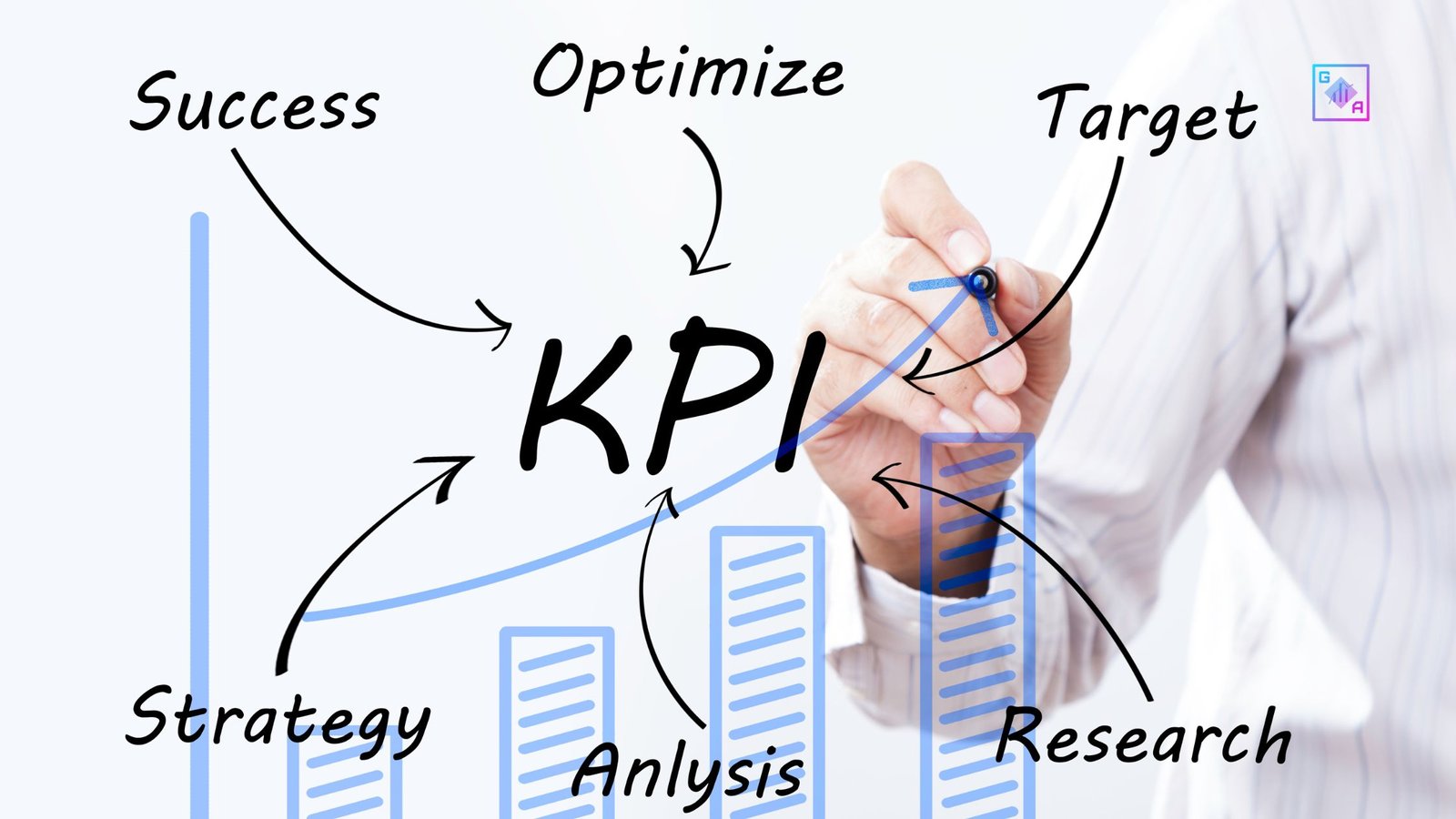
One of the biggest misconceptions beginners have about data analytics is that the job is only about tools and dashboards. In reality, the true value of analytics lies in KPIs and metrics the numbers that guide business decisions.
Companies don’t ask analysts to “analyze everything.”
They ask:
- Are we growing?
- Where are we losing money?
- Which actions improve performance?
This blog explains how data analysts use KPIs and metrics, why they matter, and how students can master them to become job-ready.
What Are KPIs in Data Analytics?
KPIs (Key Performance Indicators) are measurable values that show how effectively a business is achieving its objectives.
In analytics, KPIs help:
- Track performance
- Identify problems early
- Measure success
- Support decision-making
Examples:
- Revenue growth
- Customer retention rate
- Conversion rate
- Cost per acquisition
KPIs vs Metrics: What’s the Difference?
Many beginners use these terms interchangeably, but they are not the same.
Metrics
- Measure activities
- Provide detailed data points
KPIs
- Focus on business goals
- High-impact and decision-driven
📌 Example:
- Metric: Website visits
- KPI: Conversion rate
Why KPIs Are Critical for Business Decisions
Without KPIs:
- Businesses rely on assumptions
- Problems go unnoticed
- Teams lack direction
With KPIs:
✔ Decisions are data-backed
✔ Performance is measurable
✔ Strategy becomes clearer
This is why interviewers often ask:
“Which KPIs would you track for this business?”
Common Types of KPIs Used by Data Analysts
1️⃣ Sales & Revenue KPIs
- Total revenue
- Monthly growth rate
- Average order value
Used to evaluate business growth.
2️⃣ Marketing KPIs
- Conversion rate
- Cost per lead
- Campaign ROI
Used to measure marketing effectiveness.
3️⃣ Customer KPIs
- Customer lifetime value (CLV)
- Retention rate
- Churn rate
Used to understand customer behavior.
4️⃣ Operations KPIs
- Order fulfillment time
- Productivity metrics
- Error rates
Used to optimize internal processes.
How Data Analysts Select the Right KPIs
Good analysts don’t track everything—they track what matters.
Key Questions Analysts Ask
- What is the business goal?
- Who will use this KPI?
- Can this KPI drive action?
Tracking irrelevant KPIs leads to dashboard clutter and confusion.
How KPIs Are Analyzed Using Analytics Tools
Excel
- KPI calculations
- Trend analysis
- Summary reports
SQL
- KPI extraction from databases
- Aggregations and filters
- Time-based analysis
Power BI
- KPI cards
- Interactive dashboards
- Drill-down analysis
Real-Life Example: KPI-Driven Decision Making
Business Problem
A company noticed declining profits despite increasing sales.
KPI Analysis Revealed:
- High revenue growth
- Rising customer acquisition costs
- Low repeat purchases
Decision Taken:
✔ Focus on retention strategies
✔ Optimize marketing spend
This shows how KPIs reveal the real story behind numbers.
Common KPI Mistakes Beginners Make
❌ Tracking too many KPIs
❌ Choosing vanity metrics
❌ No business context
❌ Not explaining KPI impact
How Students Can Practice KPI Analysis
✔ Build KPI-based dashboards
✔ Solve case studies
✔ Analyze real datasets
✔ Practice explaining KPIs verbally
This preparation is crucial for interviews and projects.
KPIs in Data Analytics Interviews
Interviewers may ask:
- What KPIs would you track for an e-commerce company?
- How do you measure business success?
- Which KPI matters most and why?
Clear KPI understanding sets strong candidates apart.
Conclusion
KPIs are the bridge between data and decisions.
For students and freshers, learning how to identify, analyze, and explain KPIs is just as important as learning tools like SQL or Power BI.