
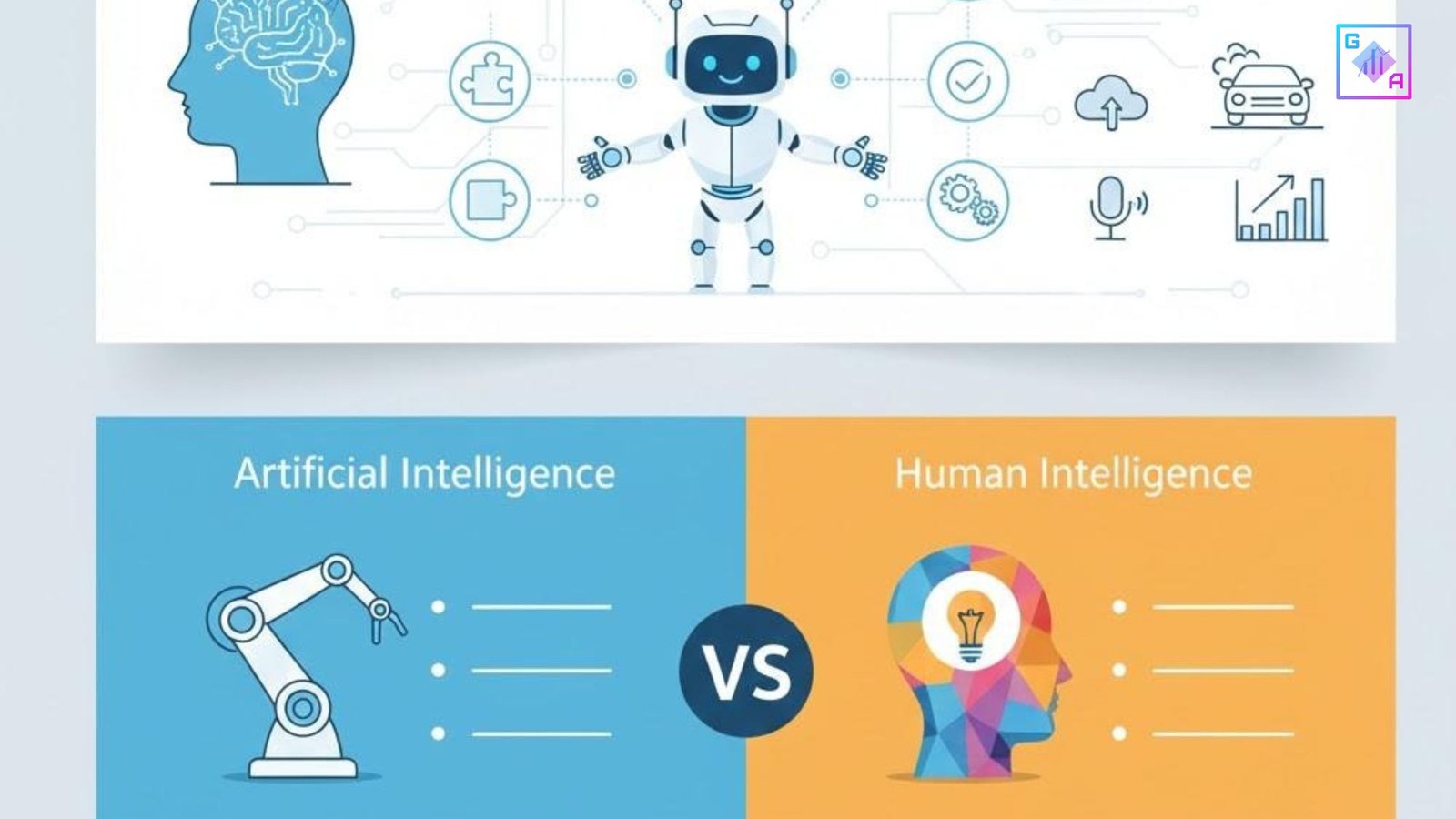
Artificial Intelligence (AI) is no longer just a futuristic concept it is part of our everyday lives. From voice assistants and recommendation systems to fraud detection and self-driving cars, AI is transforming how we live and work.
If you’re wondering what is artificial intelligence, this blog explains AI in simple terms, covering its meaning, how it works, types, and real-world applications perfect for beginners.
What Is Artificial Intelligence?
Artificial Intelligence (AI) refers to the ability of machines or computer systems to mimic human intelligence. This includes learning from data, recognizing patterns, making decisions, and solving problems.
In simple words, AI enables machines to think, learn, and act like humans sometimes even faster and more accurately.
How Does Artificial Intelligence Work?
AI systems work by combining:
- Data – Large amounts of structured or unstructured data
- Algorithms – Rules and models that process data
- Computing Power – To analyze data efficiently
The more data an AI system learns from, the smarter it becomes.
Types of Artificial Intelligence
1. Narrow AI (Weak AI)
Designed to perform a specific task.
Examples:
- Google Search
- Chatbots
- Recommendation systems
2. General AI (Strong AI)
Machines that can perform any intellectual task a human can do.
3. Super AI
A hypothetical form of AI that surpasses human intelligence.
This exists only in theory today.
Real-World Applications of Artificial Intelligence
AI is used across industries, including:
- Healthcare: Disease prediction and diagnostics
- Finance: Fraud detection and risk analysis
- Retail: Personalized recommendations
- Marketing: Customer targeting and analytics
- Transportation: Self-driving vehicles
Artificial Intelligence vs Human Intelligence
| Artificial Intelligence | Human Intelligence |
| Learns from data | Learns from experience |
| Works faster on large data | Better at creativity |
| Consistent performance | Emotional and intuitive |
AI supports humans—it does not replace human creativity or emotions.
Why Artificial Intelligence Is Important Today
AI helps organizations:
- Automate repetitive tasks
- Improve decision-making
- Reduce errors
- Increase efficiency and innovation
This is why AI and GenAI skills are in high demand.
Is Artificial Intelligence the Same as Generative AI?
Not exactly.
- Artificial Intelligence is the broader concept
- Generative AI (GenAI) focuses on creating content such as text, images, audio, and code
Examples of GenAI include chatbots, image generators, and AI writing tools.
Conclusion
Now that you understand what is artificial intelligence, it’s clear why AI is transforming industries worldwide. From simplifying daily tasks to driving innovation, AI is shaping the future of technology and work.
For beginners, learning AI fundamentals opens doors to exciting opportunities in analytics, automation, and digital transformation.